From Local Solutions to Global Transformation

On 19 October, join us in Dublin to explore how regions across Europe are advancing the bioeconomy transition – from forestry and agricultural regions to coastal communities. Take the opportunity to connect with peers facing the same regional challenges.

The bioeconomy transition is increasingly built region by region, through governance decisions and stakeholder initiatives. But regional actors rarely get the chance to exchange experiences.

This event, co-organised by the Horizon Europe BIO2REG project and EFI Bioregions, will take place alongside the Global Bioeconomy Summit 2026. It brings together regional policymakers, practitioners and researchers to compare notes on approaches that can be adapted across regional contexts, and explore opportunities for future collaboration.

It also marks the final public event of the BIO2REG project, presenting key findings and regional case studies in the context of the Bioeconomy Summit.

The recordings from the BIO2REG Network webinar series are now freely available online, making the. webinar content accessible to website visitors at any time. The archive helps extend the value of the training beyond the live events.

BIO2REG has hosted a series of webinars covering practical topics for regional bioeconomy development, including stakeholder engagement, bio-based resource use, hydrogen, and forestry-based transitions.

Webinar overview

Turning Challenges into Opportunities: Regional Bioeconomy in Practice
Presents lessons from regional bioeconomy practice and the BIO2REG Best Practice Guide, with examples of how regions can turn transition challenges into opportunities.

Introduction to the Multi-Criteria Assessment Approach
Explains a newly developed assessment framework designed to help regions evaluate their bioeconomy status and identify growth potential.

How can multi-actor collaboration drive real impact in regional bioeconomy initiatives?
Focuses on collaboration across stakeholders and shows how multi-actor approaches can strengthen regional bioeconomy initiatives.

Fully utilising a bioresource
Explores how biomass and other bioresources can be used more effectively to support circular bioeconomy solutions.

Forestry and Forest-Based Industry: Advancing Regional Bioeconomy Transitions
Looks at how forestry and forest-based industries can contribute to regional bioeconomy transitions through innovation, biomass management, value chain coordination, and governance.

Hydrogen and the bioeconomy – one pathway to solving the future energy challenges
Highlights how hydrogen-based solutions and industrial applications can help accelerate a more resilient and future-proof energy system.

Designing an effective stakeholder engagement strategy for the bioeconomy
Offers practical guidance on building a stakeholder engagement strategy for bioeconomy projects and initiatives.

Watch the recordings here

Image: kajallata / Adobe Stock

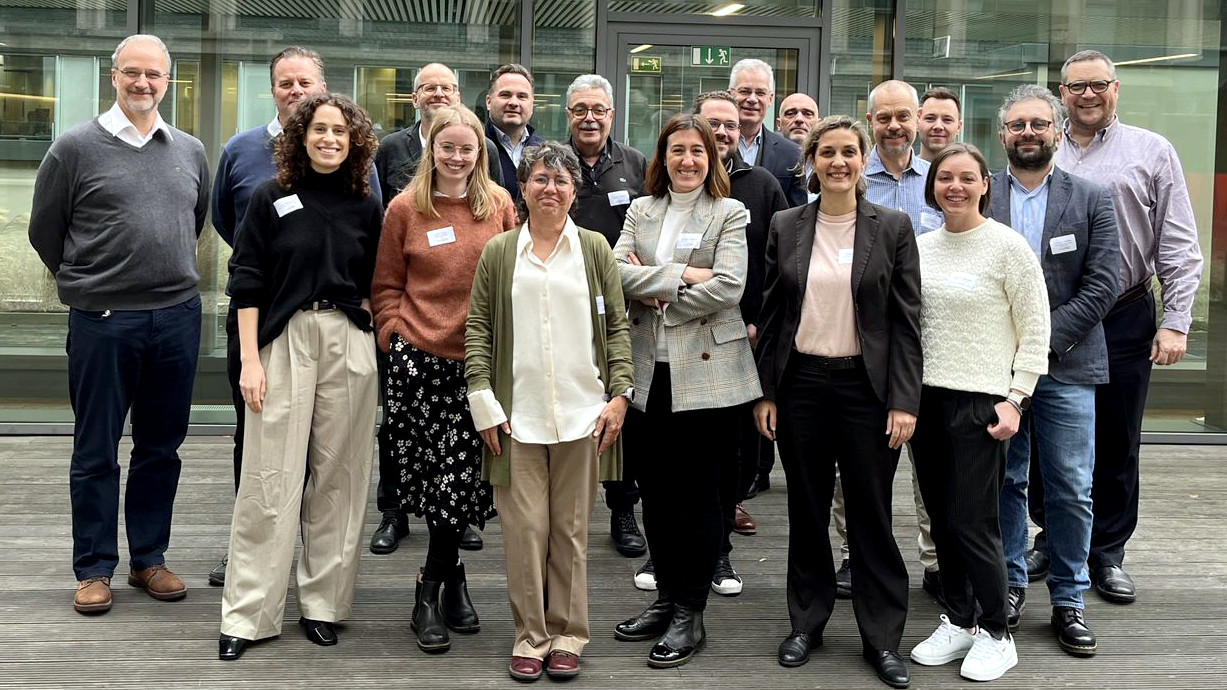
On 3 February 2026, regional authorities, researchers, cluster managers and policymakers gathered in Brussels for BIO2REG Connect, a flagship event organised by the BIO2REG project team. The event addressed the key question of how Europe’s ambitions for the bioeconomy can be implemented at the regional level.

Unlocking Regional Pathways for the Bioeconomy

Open invitation to regions seeking to turn their bioeconomy ambitions into concrete regional action: Registration is now open for BIO2REG Connect – Unlocking Regional Pathways for the Bioeconomy.

The event, taking place on February 3rd in Brussels, brings together regional authorities, clusters, researchers, development actors, policymakers, and experts eager to accelerate bioeconomy development in their regions. It will offer plenty of room for exchange, learning, and networking.

The morning features keynotes from the European Research Executive Agency, EU-level policy insights and regional development actors, to set the scene for regional pathways in a fair and just bioeconomy transition. It also includes insights from BIO2REG on the support available for regions, as well as pitches showcasing concrete regional initiatives and services that can help accelerate regional bioeconomy projects.

The afternoon focuses on lively exchange and direct dialogue. An interactive session will bring together regional experiences and perspectives to identify common needs and challenges and turn them into concrete next steps. Breakout discussions and a “speed-dating” session create space to connect, share ideas, and learn from each other. The day finishes with a networking reception offering a great opportunity to connect, share ideas, and build lasting partnerships.

Join us for a day of inspiring discussions, practical insights, and hands-on collaboration!

More information

Register now!

Regions were analysed and compared through different groups of indicators.
Source: https://doi.org/10.1016/j.clcb.2025.100195

From research carried out within the project, partners from the BIO2REG consortium have published a scientific article outlining their data-driven method for assessing the readiness and potential of regions across Europe to transition to a circular bioeconomy. Titled “Circular bioeconomy and the regions: Developing a two-step multi-criteria assessment (MCA) framework to evaluate regional bioeconomy potential in 8 selected European countries“, the paper appears in the scientific journal Cleaner and Circular Bioeconomy. 

​Authored by Panos Kalimeris and his colleagues at the Institute of Urban Environment and Human Resources, Panteion University Athens, Greece, the study builds on an extensive review of existing literature to compile a comprehensive set of bioeconomy indicators. ​ 

On this basis, the research identified 897 potential bioeconomy indicators drawn from academic studies, EU and international reports, and previous bioeconomy projects. Through a rigorous validation process – focusing on data availability, regional coverage, comparability, and transparency – the authors narrowed this to a final set of 41 quantifiable indicators suitable for regional-level assessment. 

The framework then applies a two-step Multi-Criteria Assessment combining a Traffic Light Assessment for indicator selection and the modified TOPSIS decision-analysis method for regional ranking. As a first proof of concept, the framework was applied to regions in eight countries: Belgium, Czech Republic, France, Germany, Greece, Spain, Sweden, and Iceland. The ranking identifies “champion regions” with strong bioeconomy potential across economic, social, environmental, and sectoral dimensions. 

“Regions are key drivers of the bioeconomy, each characterized by unique natural resource capacity, sectoral composition, and development opportunities,” said Panos Kalimeris, highlighting the importance of this work. “Our study proposes a two-step MCA framework designed to assess regional bioeconomy potential. The results highlight significant regional differences and offer insights to support tailor-made interventions and policy actions.” 

Do you want to learn more about the MCA? Join our webinar on December 11!

As Europe strengthens efforts toward climate neutrality, bioeconomy is emerging as a potential solution for sustainable economic development. A new working paper, authored by by Panagiotis Koronaios, researcher at the Institute of Urban Environment and Human Resources at Panteion University, discusses how bioeconomy strategies can unlock environmental and economic benefits, particularly in countries like Greece facing both ecological stress and economic transition.

The paper titled “Bioeconomy as a driver of sustainable regional development in Greece & Europe”, recently released in Greek by the ENA Institute for Alternative Policies, analyzes how the bioeconomy can support regional resilience, innovation and green jobs. Developed at Institute of Urban Environment and Human Resources at Panteion University – a partner of the BIO2REG project -, the study aligns with BIO2REG’s mission to support Europe’s regions shift from fossil-based economies to bio-based, sustainable systems.

According to the paper, bioeconomy accounts for €2.3 trillion in turnover across the EU, contributing to 8.2% of total employment. However, in countries like Greece, where awareness is still limited, the full potential is largely untapped.

The paper showcases European examples of successful bio-based innovation to help readers grasp how bioeconomy contrasts with traditional economic activities. Production of biodegradable wheat straws by Staramaki in Greece and manufacturing cod skin medical products in Iceland demonstrate how waste streams and biological resources can be made into value-added products.

The paper argues that the bioeconomy can act as a catalyst for regional economic development by leveraging natural resources and connecting the agricultural sector with new technologies and emerging markets. In Greece, bioeconomy principles have particular potential in the primary sector (agriculture, forestry, fisheries), tourism and the pharmaceuticals, building on the country’s rich biodiversity and cultural heritage.

Despite isolated efforts, the paper identifies the lack of a national bioeconomy strategy as a major challenge. Only two Greek regions, Crete and Central Macedonia, have incorporated bioeconomy into development plans. The authors point to the absence of a coherent institutional framework as a key difficulty in developing the bioeconomy in Greece, even though the relevant capabilities and promising initiatives are present. A coordinated national framework supported by investment and regulatory alignment is essential for scaling innovation and attracting funding from EU programmes like Horizon Europe, LIFE and the Common Agricultural Policy (CAP).

BIO2REG connects the knowledge to practice

While the working paper highlights the untapped potential of the bioeconomy, particularly in Greece, it stresses the need to turn knowledge into practice. This is precisely where the BIO2REG project becomes a crucial tool. Funded by Horizon Europe, BIO2REG is working to help regions transition to bio-based development by identifying best practices, supporting knowledge exchange and set-up of a transition action plan. 

Further reading

To read a detailed English summary of the working paper, visit the ENA Institute website.
To access the full paper in Greek, visit: ENA Full Paper (PDF)

BIO2REG is moving from its foundational build-up phase to an exciting new stage of implementation and interregional collaboration. The project has reached the halfway point of its three-year runtime, marking significant progress and the development of practical tools for the regional bioeconomy transition. The project is now well on its way to activating its interregional exchange instrument and launching the BIO2REG network later this year.

“With the first project period completed and the second now underway, this turning point reflects both the consortium’s collective achievements and our shared commitment to supporting regional transitions toward circular bioeconomy model regions,” emphasises Denise Gider, the BIO2REG project coordinator at BioökonomieREVIER, Forschungszentrum Jülich. A suite of practical outputs has been finalised to empower regional stakeholders and policy actors as they move toward sustainable, systemic change.

Among the key achievements is the Multi-Criteria Assessment (MCA) tool, designed to guide regional stakeholders through a self-assessment process for regions’ bioeconomy potential. Delivered as an accessible Excel-based tool, the MCA offers practical decision support built on a clear set of bioeconomy indicators. It is accompanied by a user-friendly guide that helps non-expert stakeholders evaluate their region’s bioeconomy potential in four practical steps. Grounded in the BIO2REG regionalization concept, the guide promotes a hands-on, operational approach to mapping and assessing regional bioeconomy indicators.

Recognising that bioeconomy transitions require consistent monitoring and strategic adjustment over time, the guide also emphasizes the importance of ongoing evaluation. “Bioeconomy transitions take time and require constant re-evaluation of the progress and the targets,“ points out one of the authors, Panos Kalimeris, Assistant Professor at Research Institute of Urban Environment & Human Resources, Panteion University Athens, adding: “A clearly defined monitoring system, supported by regional engagement and incremental progress, creates the best conditions for lasting regional transformation.”

In addition to the MCA tool, BIO2REG has released:

Looking ahead, the BIO2REG consortium is actively preparing for the launch of its interregional exchange instrument around October – an initiative that will foster alliances between more advanced bioeconomy model regions and GHG-intensive regions seeking to transition. The anticipated BIO2REG network will offer tools, expertise, and strategic support to regional actors. By connecting regional development agencies, public authorities, entrepreneurs, and bioeconomy experts, the network will promote knowledge exchange, collaboration, and long-term partnerships across regions.

“With these strong foundations laid,” concludes Gider, “the project is well-positioned to facilitate dialogue and mutual learning between regions – helping both experienced regions and those just beginning their bioeconomy transition to advance practical, regionally adapted bioeconomy solutions and structures across Europe.”

View all of BIO2REG’s results

Key system dimensions for transitioning to a bioeconomy model region.
Source: BioökonomieREVIER, Forschungszentrum Jülich

The BIO2REG regionalization concept is a practical framework for initiating and further developing circular bioeconomy model regions across Europe. The concept equips regional stakeholders with a framework using its entire regional bioeconomy system to drive innovation, foster sustainable growth, create jobs, and enhance community well-being. Through implementation-oriented approaches, it turns bioeconomy concepts into tangible actions, ensuring real-world impact at the (micro) regional level.

Bioeconomy model regions

A bioeconomy model region is a geographically defined area in which circular bioeconomy acts as a central transformative narrative, where circular bioeconomy principles drive innovation, sustainable growth, and community well-being by linking regional resources, stakeholders, and strategies to support systemic transition and building on its unique strengths.

More about bioeconomy model regions

As one of its first major achievements, the BIO2REG project introduced its regionalization concept, led by project coordinator BiökonomieREVIER at Forschungszentrum Jülich with the support of the consortium and BIO2REG’s Advisory Board members. The framework, which is under review by the European Commission, outlines how to adapt circular bioeconomy principles to the unique characteristics, needs and strengths of specific regions.

Built on an integrative systems approach, the framework highlights critical fields of action that bridge system dimensions, such as governance, innovation ecosystems, stakeholder collaboration, training, and sustainable resource management, explains BIO2REG project coordinator Denise Gider. “This approach ensures impactful and coordinated regional bioeconomy transitions. It translates high-level global, macro-regional, and national bioeconomy strategies into actionable regional plans, aiming to generate tangible impacts at the local level by integrating the whole regional bioeconomy system”, Gider adds.

The regionalization concept is the foundation of BIO2REG’s interventions and serves as a basis for building capacities in regional stakeholders, with a particular focus on local authorities and businesses. It centers on the understanding and benefits of understanding and using circular bioeconomy principles for regional development, ensuring that the framework is adaptable to various regional conditions. The concept is implemented through targeted activities in different European regions that engage and build capacities in the region’s key stakeholders, enabling them to initiate or further mature their bioeconomy model regions through actionable, region-specific action plan.

The next steps within BIO2REG will involve refining the regionalization concept through continued workshops, stakeholder engagement, and feedback integration as part of Work Package 2. This work package focuses on establishing the BIO2REG network and organizing events in 2025 across five BIO2REG regions in Spain, Greece, Germany, Czech Republic, and Sweden.
Download the regionalization concept

View all results